

University of Ottawa, Canada
Conference Chair
Professor Kruczek received his PhD in Chemical Engineering at the University of Ottawa in 1999. His Ph.D. work involved development and characterization of polyphenylene oxide-based membranes for gas separation. Upon graduation Professor Kruczek joined the Department as a Faculty member. The research interests of professor Kruczek include development and characterization of polymeric, inorganic and hybrid organic-inorganic membranes for gas separation. A special aspect of his research on membrane characterization consists of fundamental studies on the transport phenomena downstream from the membrane, such as resistance to accumulation of gases in high vacuum receivers and back diffusion and back permeation in constant pressure systems, and their influence on the experimentally determined diffusion, solubility and permeability coefficients as well as the membrane permselectivity. His major efforts in the area of material development are focused on emulsion polymerized mixed matrix (EPMM) membranes, which is a new type hybrid membranes. His research in the area of inorganic membranes includes synthesis of zeolite membranes by secondary growth and pore plugging, as well as, incorporation of highly ordered natural clays in synthesis of titanium dioxide-based membranes. Professor Kruczek publishes his research in Journal of Membrane Science, Journal of Applied Polymer Science, Separation and Purification Technology, Journal of Flow Measurement and Instrumentation, Desalination, Canadian Journal of Chemical Engineering, and Experimental Heat Transfer.

University of Guelph, Canada
Conference Chair
Professor Wael Ahmed received his PhD in Mechanical Engineering from McMaster University in 2005. He then spent four years working in the power generation industry with Atomic Energy of Canada Ltd. And AMEC-Nuclear Safety Solutions. In 2009, he worked at King Fahd University of Petroleum and Minerals in Saudi Arabia as an Assistant Professor. He joined the University of Guelph in 2014 where he is now a full Professor.
Toronto Metropolitan University, Canada
Conference Chair
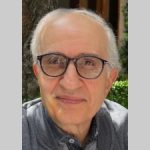
Dr. Farhad Ein-Mozaffari received his Ph.D. in chemical engineering from the University of British Columbia. Currently, he is a professor in the Department of Chemical Engineering at Toronto Metropolitan University. Dr. Ein-Mozaffari is a registered professional engineer in Ontario, Canada. His research interests are mixing, computational fluid dynamics (CFD), flow visualization (e.g., tomography and ultrasonic velocimetry), multiphase flow, non-Newtonian fluid flow, hydrodynamics of bioreactors, scale-up of chemical processes, discrete element modeling (DEM), CFD-DEM coupling, and powder blending. He has published more than 380 refereed journal papers, book chapters, conference papers, and industry-university technical reports. Dr. Ein-Mozaffari has supervised/co-supervised more than 59 PhD and MASc students, PDF, and research associates. He has been awarded various reputable research grants such as NSERC DG, NSERC RTI, NSERC CRD, NSERC Alliance, New Frontiers in Research Fund – Exploration, NSERC ENGAGE, CFI, Mitacs, Connect Canada, and OCE. Dr. Ein-Mozaffari has collaborated with numerous companies such as Xerox Research Centre of Canada, Apotex, Sanofi Pasteur, Cosmetica Laboratories Inc., Baffinland Iron Mines, CSRplus, Hayward Gordon, Husky Injection Molding Systems Ltd., and Imasco Minerals Incorporation. He is the editor and a member of the editorial board of several journals. Dr. Ein-Mozaffari is the recipient of several awards including Dean’s Research Award, Dean’s Service Award, and YSGS Outstanding Contribution to the Graduate Education Award.

University of Nottingham, UK
Conference Chair
Prof Jo Darkwa is a Professor of Energy Storage Technologies at the University of Nottingham, UK with extensive academic and industrial experience. He was the founding Director of the Centre for Sustainable Energy Technologies and Director of Key Laboratory for Integrated Thermal Energy Storage Technologies at the University of Nottingham, China. He has researched widely including topics on various integrated energy and environmental systems. He has successfully led number of UK Government, EU and Chinese government/privately funded energy storage related projects. He has in the past organised several International Conferences/Symposia and given keynote addresses. He has been a consultant/advisor to organisations such Tarmac plc. (Thermodeck), London Underground, CIBA Ltd, United States Gypsum Company and Certain Teed Corporation in USA, in energy storage and cooling/heating related research projects. He has also been honoured by the Terrestrial Energy Systems Technical Committee of the American Institute of Aeronautics and Astronautics (AIAA) as well as receiving an award for Technical Excellence in energy conversion engineering systems.
Dr Resende Faria is known for his interdisciplinary research at the intersection of multisensory artificial intelligence, cognitive robotics, neuro-affective intelligence, and human-machine interaction. His work integrates neuro-affective AI, assistive technologies, and intelligent systems to improve interaction between humans and machines (healthcare and education).
With extensive academic and research experience across the UK, Portugal, and Brazil, he has led or contributed to major international projects funded by EU Horizon, CHIST-ERA, EPSRC-UK, Innovate UK, and The Royal Society (UK), FCT-Portugal and CONFAP-Brazil.
Prof Jo Darkwa is a Professor of Energy Storage Technologies at the University of Nottingham, UK with extensive academic and industrial experience. He was the founding Director of the Centre for Sustainable Energy Technologies and Director of Key Laboratory for Integrated Thermal Energy Storage Technologies at the University of Nottingham, China. He has researched widely including topics on various integrated energy and environmental systems. He has successfully led number of UK Government, EU and Chinese government/privately funded energy storage related projects. He has in the past organised several International Conferences/Symposia and given keynote addresses. He has been a consultant/advisor to organisations such Tarmac plc. (Thermodeck), London Underground, CIBA Ltd, United States Gypsum Company and Certain Teed Corporation in USA, in energy storage and cooling/heating related research projects. He has also been honoured by the Terrestrial Energy Systems Technical Committee of the American Institute of Aeronautics and Astronautics (AIAA) as well as receiving an award for Technical Excellence in energy conversion engineering systems.
Queen Mary University of London, Uk
Conference Chair
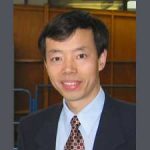
Professor Wang has many years research and teaching experience in thermofluids engineering, building services in universities in China, Japan and the UK. His research interests are in the field of enhanced heat transfer, condensation heat transfer, flow boiling heat transfer, inverse method of heat transfer measurement, molecular dynamics simulations of condensation and boiling/evaporation, multiscale simulations, advanced refrigeration technologies, sustainable thermal energy systems e.g. solar assisted air source heat pump based heating systems and advanced intelligent control for building management systems.
Professor Zhang’s research interests include synthesis and optimization of parallel and hybrid mechanisms; generalized parallel mechanisms research; reconfigurable robots; innovation design of parallel robots; parallelization of serial robots; micro/nano manipulation and MEMS devices (e.g., sensors); rescue robots; smart biomedical instruments (e.g., exoskeleton robots and rehabilitation robotics); AI/robotics/autonomous systems; aerial and underwater robotics; artificial intelligence for robotics; intelligent reconfigurable adaptive landing gear and manipulator (manipulander).
Professor Zhang is a well-accomplished educator and an internationally renowned expert in the areas of parallel robotic machines and their applications in manufacturing systems. His influential scientific contributions have led to novel robotic system designs and development of new comprehensive models for better understanding of globe stiffness and robotic calibrations. His research applications have tackled some of the world’s most challenging problems in high dynamic performance manufacturing robotic systems. His leadership has resulted in significant contributions to the areas of robotics, mechatronics, reconfigurable/sustainable manufacturing systems and MEMS devices. His accomplishments have been recognized by many honors and awards including Canada Research Chair, Research Excellence Awards, Tier 1 York Research Chair, Lassonde Innovation Awards — Established Researcher, Early Researcher Award by Ministry of Research and Innovation, Fellow of the Canadian Academy of Engineering (CAE), Fellow of the Engineering Institute of Canada (EIC), Fellow of the American Society of Mechanical Engineers (ASME) and Fellow of the Canadian Society for Mechanical Engineering (CSME).
Professor Zhang has published 296 journal papers and 193 conference papers, 12 books, 9 book chapters and numerous other technical publications. Professor Zhang has served as a General Chair for 82 international conferences and delivered 136 keynote speeches. Professor Zhang is listed as one of the world’s top two percent researchers by Stanford’s standardized citation indicators in 2020, 2021, 2022, 2023, 2024, and 2025.